Intelligence Archive
Analysis & Intelligence
Analysis on the companies, policies, technologies, and capital flows shaping the micro-cap economy.
25 articles · sorted by most recent

The $1B Non-Opioid Pain Play: Latigo's NEJM-Validated Nav1.8 Inhibitor Goes Public
Latigo Biotherapeutics (LTGO) — with $321M raised pre-IPO, Phase 2b data published in NEJM, FDA Fast Track designation, and a 52% opioid-free rate — goes public at ~$1B valuation to challenge Vertex's Journavx in the multibillion-dollar non-opioid pain market.

The $465M Cancer Biotech Coming for AstraZeneca's Crown: BlossomHill's Nasdaq Debut
BlossomHill Therapeutics (BLSM) — a San Diego-based clinical-stage oncology biotech with $257M raised pre-IPO, a founder with three FDA-approved drugs, and a lead EGFR inhibitor targeting the C797S resistance mutation Tagrisso can't touch — goes public at ~$465M valuation via a J.P. Morgan-led syndicate.

The $75M Bet on a Drug No One's Heard Of: Inside Vogenx's Nasdaq Debut
Vogenx (VOGX) — a Raleigh-based clinical-stage biotech with four employees and $251K cash — goes public at ~$173M valuation with mizagliflozin, an SGLT1 inhibitor for post-bariatric hypoglycemia, a condition with zero FDA-approved therapies.

The Holding Company Behind PatentVest: Why MDB Capital's Portfolio May Be Worth More Than Its Market Cap
MDB Capital Holdings (NASDAQ: MDBH) is a publicly traded venture platform whose portfolio of equity stakes — including eXoZymes and Paulex Bio — plus $22.3M in net assets may exceed its entire $32M market cap. With PatentVest, its AI-enabled IP intelligence subsidiary, planning a spin-off and a Paulex Bio IPO targeted for September 2026, the next 12 months could test whether the sum of the parts exceeds the whole.
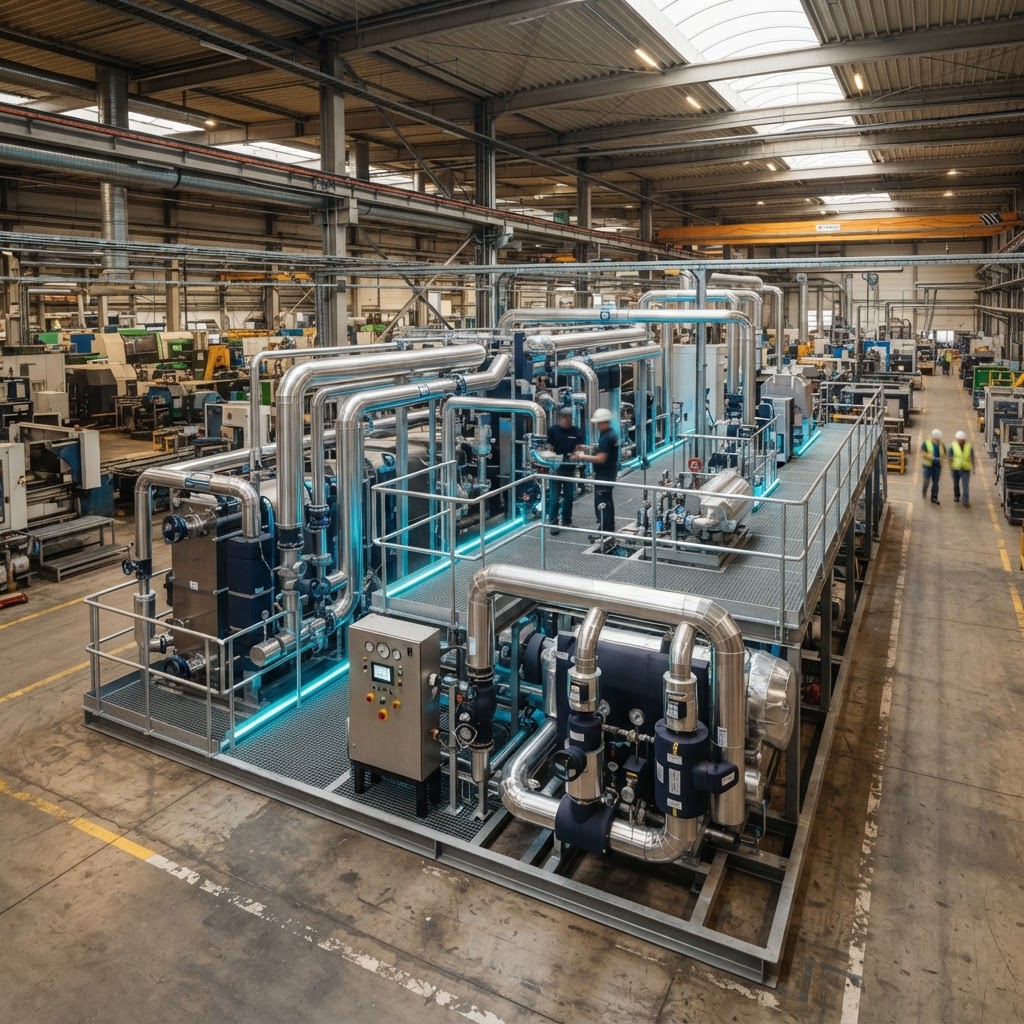
The Quiet Turnaround: How Bill Crossland Rebuilt Thermal Energy International
Thermal Energy International (TSX-V: TMG, OTCQB: TMGEF) has grown revenue every year since 2022 under long-tenured CEO Bill Crossland, with recent quarters showing 62% revenue growth and tripled adjusted EBITDA. At under 1x EV/Revenue, the market has not yet priced in the multi-year growth trend.
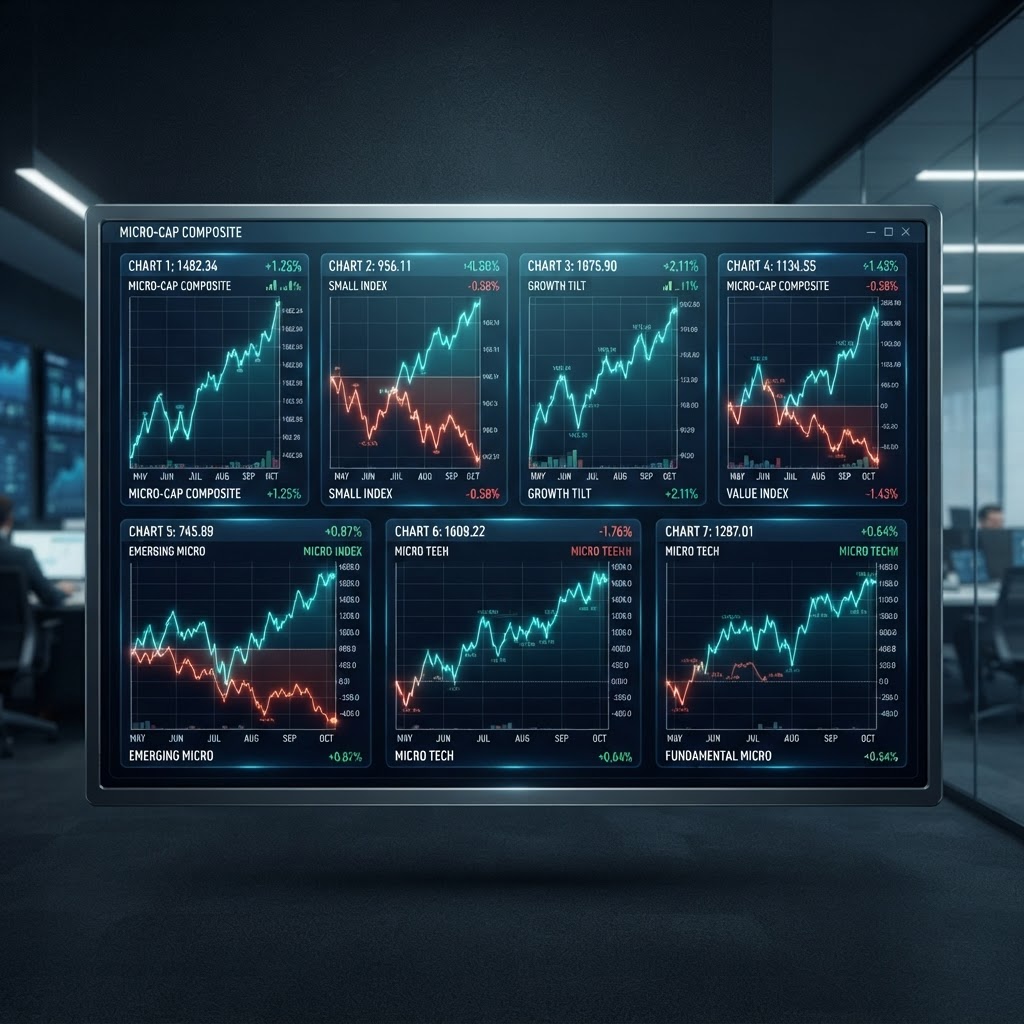
Micro-Cap Index Close: August 6, 2026 — Seven Benchmarks, One Ugly Day for Earnings Losers
The Russell Microcap Index is up 58.5% over the past year, but August 6 was an earnings-driven bloodbath for individual micro-caps. ThredUp (TDUP) got cut in half after dropping guidance, while Oportun Financial (OPRT) surged 33% on a Q2 beat. Here's how all seven benchmark indexes performed and the top 5 winners and losers in the $50M–$500M range.

A $2 Billion Bet on Light: Inside Quantum Computing Inc.'s TFLN Foundry Play
QUBT reports Q2 earnings August 10 with $1.4B in cash, a TFLN photonic chip foundry, NASA and NIST contracts, and a $2B market cap against $3.7M in quarterly revenue. A special-exception deep dive on the gap between quantum photonics potential and commercial reality.

The First Blast Heard Across the Iron Range: Inside TMCR's Minnesota Royalty Play
The Metals Royalty Company (TMCR) just fired the first production blast at its Mesabi Metallics iron ore royalty asset — 211,000 tons of ore fractured in Minnesota's first new mine in 50 years. With a 2% gross overriding royalty on a $2.5 billion DR-grade pellet project, a $363M market cap, and a Diamond Equity price target of $20.35, TMCR is a micro-cap royalty play at the exact moment American iron ore is coming back.

Russell Microcap 101: The Index That Built Micro-Cap Investing
The Russell Microcap Index launched in 2005 and has become the gold-standard benchmark for U.S. micro-cap stocks. Here's what investors need to know about its origins, methodology, track record, and the types of companies it holds.

The Micro-Cap Index Landscape: Seven Benchmarks Every Investor Should Know
Most investors think there are dozens of micro-cap indexes. There aren't. Here's the definitive breakdown of the seven benchmarks that actually matter — what they cover, how they differ, and which one is the gold standard.

First Blast at Mesabi: TMCR's Minnesota Iron Ore Royalty Just Became a Production Story
The Metals Royalty Company (TMCR) just watched its Mesabi Metallics royalty asset fire its first production blast — 211,000 tons of iron ore fractured in Minnesota's first new mine in 50 years. The royalty model means TMCR shareholders get production upside without operating risk.

A $29M Company Is Trying to Close a $1.5 Billion Deal by July 31. No More Extensions.
Diginex (NASDAQ: DGNX) — market cap under $30 million — has a signed definitive agreement to acquire Resulticks for $1.5 billion in an all-share deal. The hard deadline is July 31. No further extensions. Here's what's actually happening.
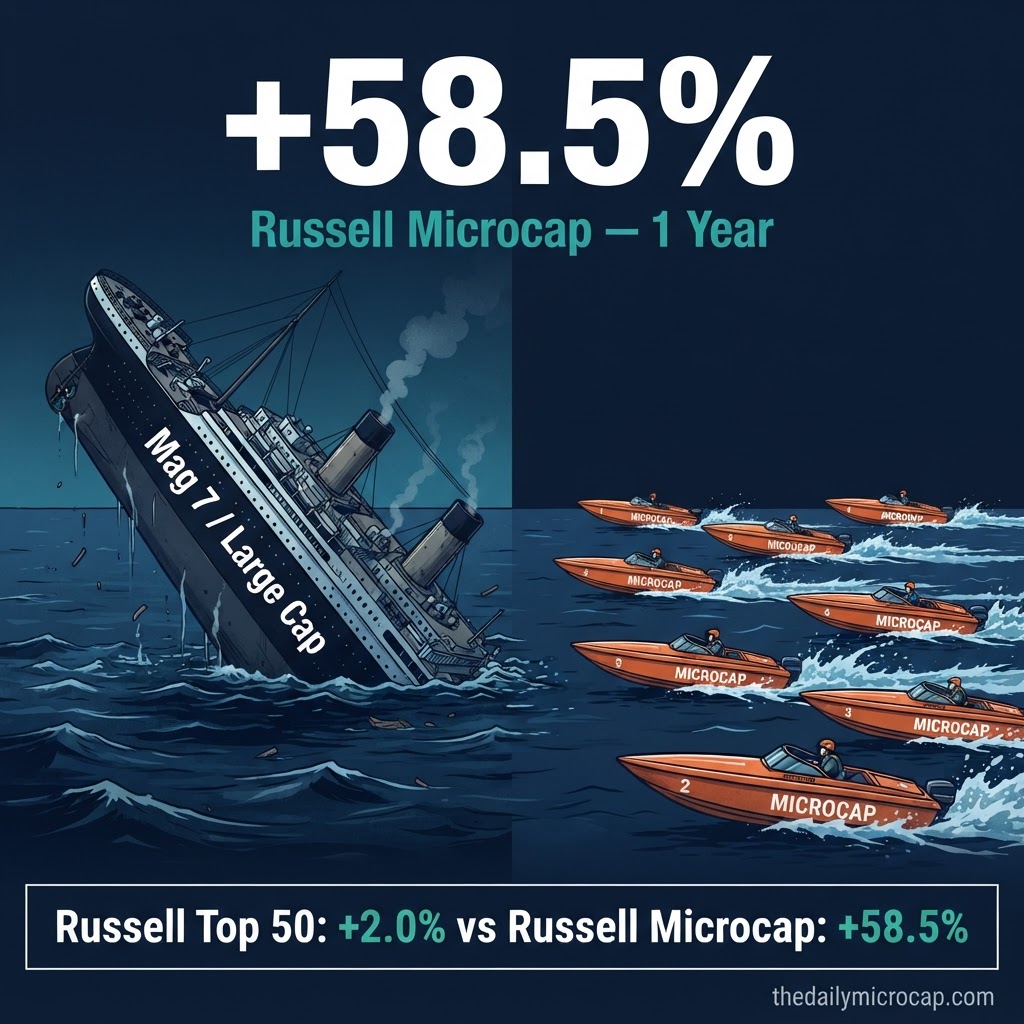
The Great Rotation Is Real. The Numbers Prove It.
The Russell Microcap Index is up 58.5% over the past year. The Russell Top 50 — the mega-cap benchmark — is up 2.0% over the same period. This is not a trade. It is a regime change. Here is what is driving it and what it means for investors in this space.

Bimergen Energy's Battery Storage Story Has a Paid-Promotion Problem
Bimergen Energy touts a 2.0 GW battery storage pipeline and a path to $400M in revenue — but the company has zero revenue today, is on its seventh reverse stock split, pays for its own investor-relations coverage, and just diluted shareholders 38% in a year.

Elmet Group Just Joined the Russell Microcap Index — and It's Actually Profitable
The Elmet Group, a freshly IPO'd precision-components manufacturer for aerospace and defense, was added to the Russell 3000 and Russell Microcap indexes in June — backed by real revenue, a record backlog, and recent defense contract wins, not just index-fund mechanics.

Trinity Biotech Is Running Two Stories at Once — A CGM Breakthrough and an AI Cooling Pivot
Trinity Biotech just published clinical data showing its CGM+ sensor can distinguish dangerous nocturnal false lows from normal sleep-related dips, while its new AI data-center liquid cooling subsidiary, Trinovium, landed Open Compute Project membership within weeks of launch. The catch: at roughly $7-11 million in market cap, this one trades below our usual $50M micro-cap floor.

Playboy Just Joined the Russell 2000 — Here's the Turnaround Behind the Ticker
PLBY Group, the company behind the Playboy brand, was just added to the Russell 2000 and Russell 3000 indexes after five straight quarters of positive adjusted EBITDA — and it just bought back Fortress Investment Group's entire 16.6-million-share stake at a steep discount.

The $90 Million Defense Micro-Cap Nobody's Watching Just Won a GPS-Denied Comms Contract
The LGL Group's Precise Time and Frequency subsidiary just won a contract to support resilient defense communications in the Indo-Pacific — real, recurring defense revenue for a roughly $90 million micro-cap that generates almost no retail buzz.

Novo Nordisk Just Validated a $108 Million Micro-Cap's Implant Technology
Vivani Medical, a roughly $108 million clinical-stage biopharma, just landed an evaluation agreement with Novo Nordisk for its ultra-long-acting semaglutide implant — real validation from one of the biggest names in weight-management drugs, with almost no promotional noise to go with it.

Palladyne AI Just Became America's Loitering Munitions Manufacturer
A ~$280M market-cap defense tech firm just landed exclusive U.S. rights to manufacture and sell Israel's combat-proven HARPY, HAROP, and Mini HARPY loitering munitions to the Department of War. Revenue is already up 107% year over year — this is a micro-cap with a real order book, not a story stock.

A Cancer Biotech Just Became a Battery Company — Here's How to Read That
LIXTE Biotechnology, a clinical-stage cancer drug developer, just completed a reverse merger with NOMAD Transportable Power Systems and is renaming itself NOMAD Power Solutions. Here's how to tell a legitimate sector pivot from a shell dressed up in a hot narrative.

Capstone Holding Corp Has Four Days to Save Its Nasdaq Listing
CAPS trades at $0.28 with a $1.5 million market cap and a pattern of blown filing deadlines. On July 6, its Nasdaq compliance clock runs out — here's what that actually means.

What It Actually Means When a Micro-Cap Joins the Russell Microcap Index
FTSE Russell's June 2026 reconstitution just added a wave of new names — Star Equity, Health In Tech, AIB Data Centers, and more — to the Russell Microcap Index. Here's the mechanic behind the headline, and why it moves the stock before it moves the business.

Micro-Caps Are Crushing the S&P — Here's What the Data Actually Shows
Real numbers on this year's micro-cap rally — and a historical pattern worth knowing before you chase it.

What Actually Is a Micro-Cap Stock?
A plain-English guide to how Wall Street really defines micro-cap stocks — and why the real numbers matter more than the hype.