Micro-Caps Are Crushing the S&P — Here's What the Data Actually Shows
Real numbers on this year's micro-cap rally — and a historical pattern worth knowing before you chase it.
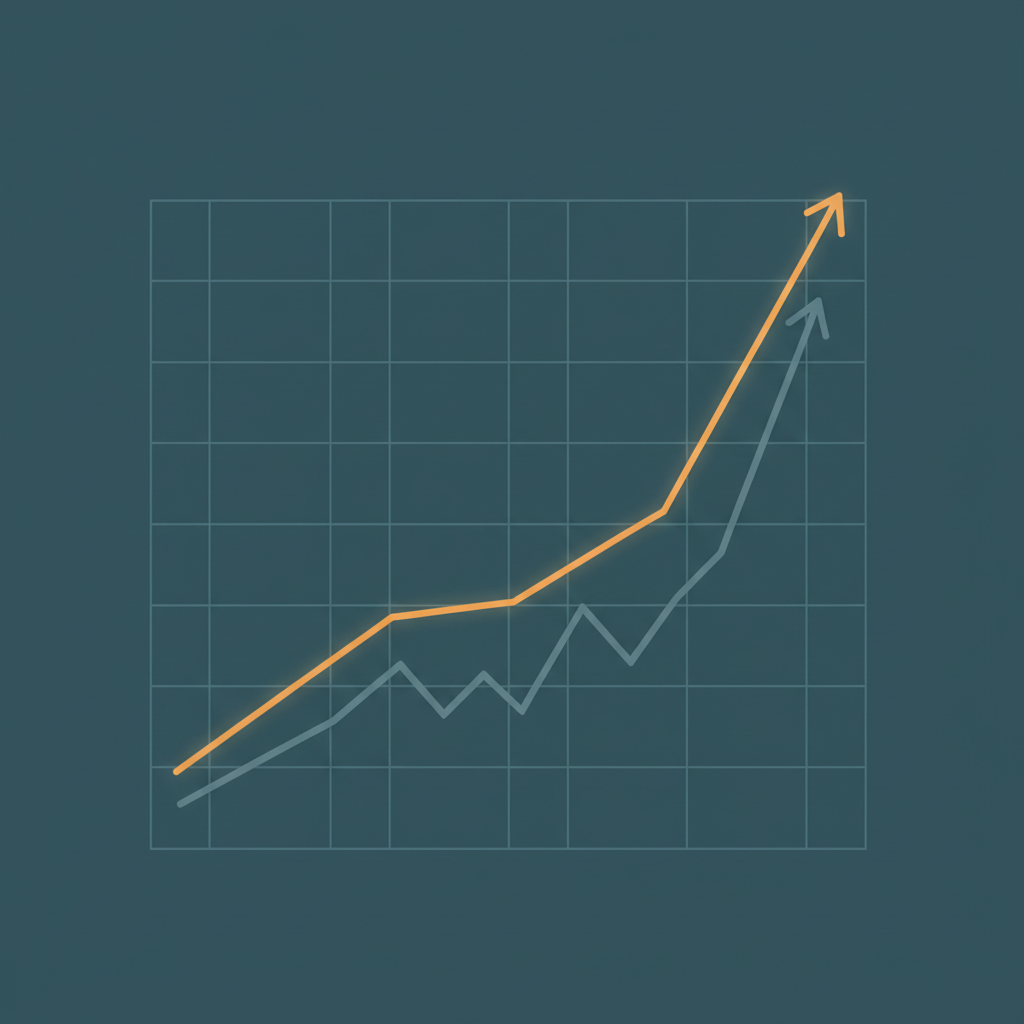
The chart everyone in micro-cap circles has been passing around lately is real, and the numbers back it up. The iShares Micro-Cap ETF (IWC) — which tracks roughly 1,400 U.S. micro-cap names — is beating the S&P 500 by a wide margin this year: up about 21.4% year-to-date versus the S&P's 12.1%. Zoom out to a full year and the gap gets more dramatic — IWC is up around 62% versus the S&P's 36%. Over three years, IWC has annualized at roughly 24.3% versus 15.9% for the S&P.
If you're new to the space, that's the kind of gap that gets people's attention fast. But before you read this as a green light, there are two things worth understanding about how this index actually works — and what history says about moments like this one.
First, IWC isn't as "equal-weight micro-cap" as it sounds. Like the S&P 500, IWC is market-cap weighted, which means the largest ~10% of names in the index carry an outsized share of its total weight — some estimates put it near 70%. In practice, that means a handful of the bigger, more liquid names in the micro-cap universe are doing a lot of the heavy lifting on that headline return. A real, profitable micro-cap company deep in the smaller end of that index — outside the top 10% — may be having a completely different year than the index number suggests.
If you want a refresher on how market cap works and why it drives index weighting, we cover the full mechanics in our glossary, and in our companion piece on what actually counts as a micro-cap stock.
Second — and this is the part worth sitting with — micro-cap outperformance like this has historically shown up late in bull markets, not early. Looking back over the last two decades, there have been two or three occasions where this exact pattern played out: IWC starts meaningfully outperforming the S&P, and 12 to 24 months later the broader bull run ends. That doesn't mean this time is the same, and it doesn't mean the rally can't keep running. But it's a signal worth logging as a point of caution, not a reason to panic and not a reason to pile in blindly either.
The takeaway isn't "avoid micro-caps because the index is topping." It's that index-level outperformance and individual stock-picking are two different games. There are real, growing, profitable micro-cap companies that aren't meaningfully represented in an index like IWC at all — and that's where the actual opportunity tends to live for investors willing to do company-level homework instead of just riding the index.
This article is for informational purposes only and does not constitute investment advice.
Todd Colpron is the Managing Partner of Eliakim Capital, a private investment and strategic advisory firm that manages its own capital while working alongside select family offices and private investors to identify and support exceptional opportunities.
Important Disclosure and Disclaimer
This publication is provided solely for general educational and informational purposes. Nothing contained in this publication constitutes, or should be construed as, investment, financial, legal, accounting, or tax advice; a recommendation or endorsement of any security, issuer, transaction, or investment strategy; or personalized advice based on any reader's particular financial circumstances.
This publication does not constitute an offer to sell, a solicitation of an offer to buy, or an invitation to enter into any transaction involving securities. Any offer or sale of securities may be made only through applicable offering documents and in accordance with applicable federal and state securities laws.
The Daily MicroCap and Eliakim Capital are not registered broker-dealers and do not execute securities transactions, accept investor funds, or provide brokerage services. Unless separately and expressly disclosed, neither The Daily MicroCap nor Eliakim Capital is acting as an investment adviser to any reader, and no advisory, fiduciary, attorney-client, or other professional relationship is created by this publication.
Information contained herein may be obtained from issuers, public filings, press releases, third-party sources, or other materials believed to be reliable; however, its accuracy, completeness, timeliness, and reliability are not guaranteed, and the information may not have been independently verified. Opinions and estimates are made as of the publication date and may change without notice.
Any statements regarding anticipated events, business prospects, financial performance, valuation, market opportunities, or future results are forward-looking and inherently uncertain. Actual outcomes may differ materially due to known and unknown risks.
Microcap and emerging-company securities can be highly speculative, volatile, illiquid, and subject to substantial dilution, limited publicly available information, and the risk of a complete loss of invested capital. Readers must conduct their own independent investigation and consult appropriately licensed financial, legal, and tax professionals before making any investment decision.
Neither The Daily MicroCap nor Eliakim Capital received compensation from the issuer for preparing or distributing this article.
Past performance is not indicative of future results. No representation or warranty is made regarding any investment outcome.